
White Roofs and Long Walls
読む前に
読む前に
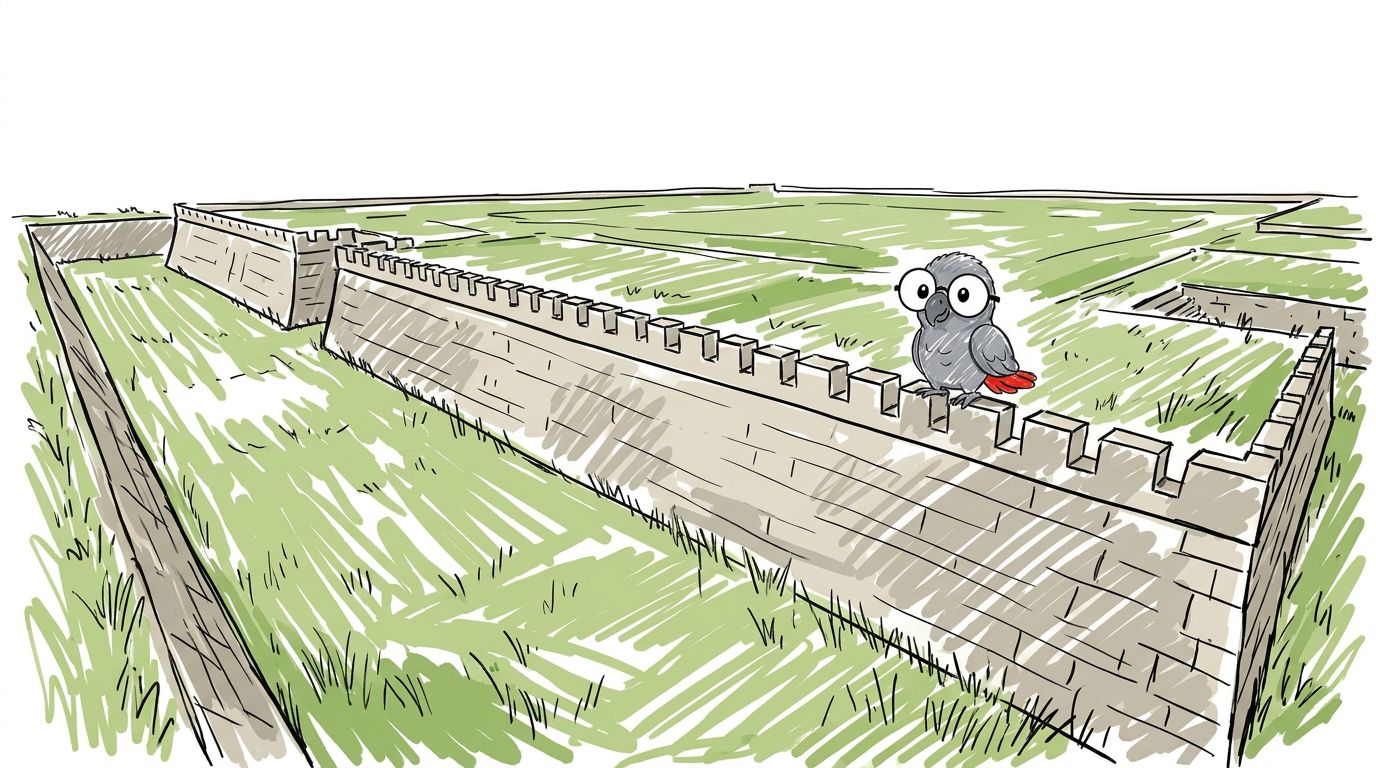
The castle grounds open out at the top of the hill into something closer to a walled plateau than a fortress. Long stone ramparts run for hundreds of paces along a dry moat, low and wide rather than tall, holding up a flat green plain where the main keep once stood. Polly walked the top of one wall from end to end without meeting a single obstacle.
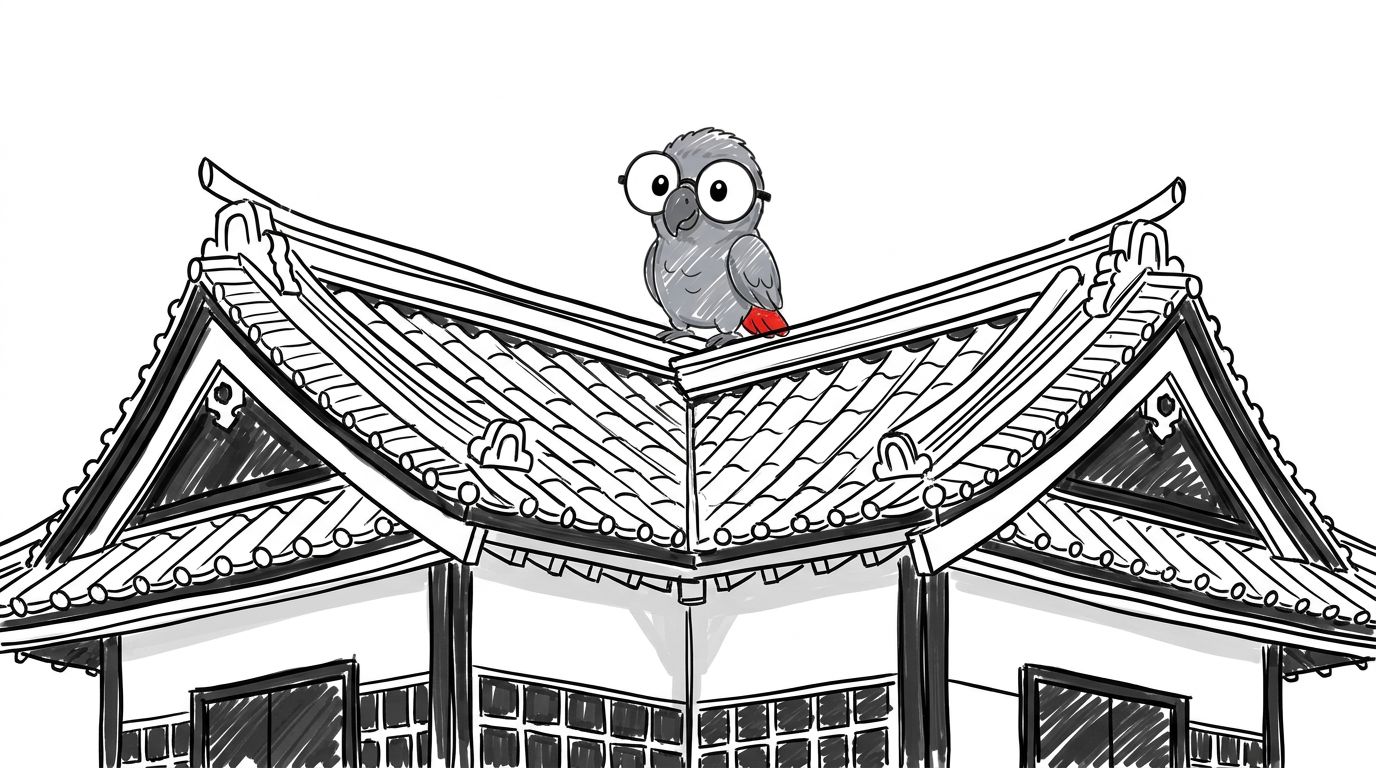
The roofs here are white, which is the first thing anyone notices and the last thing anyone expects. They are not painted, and they are not ceramic. The tiles are lead, laid over a wooden frame, and lead weathers to a soft chalky grey that reads as white against the sky. The story told locally is that in a siege the roof could be stripped and melted down into ammunition.
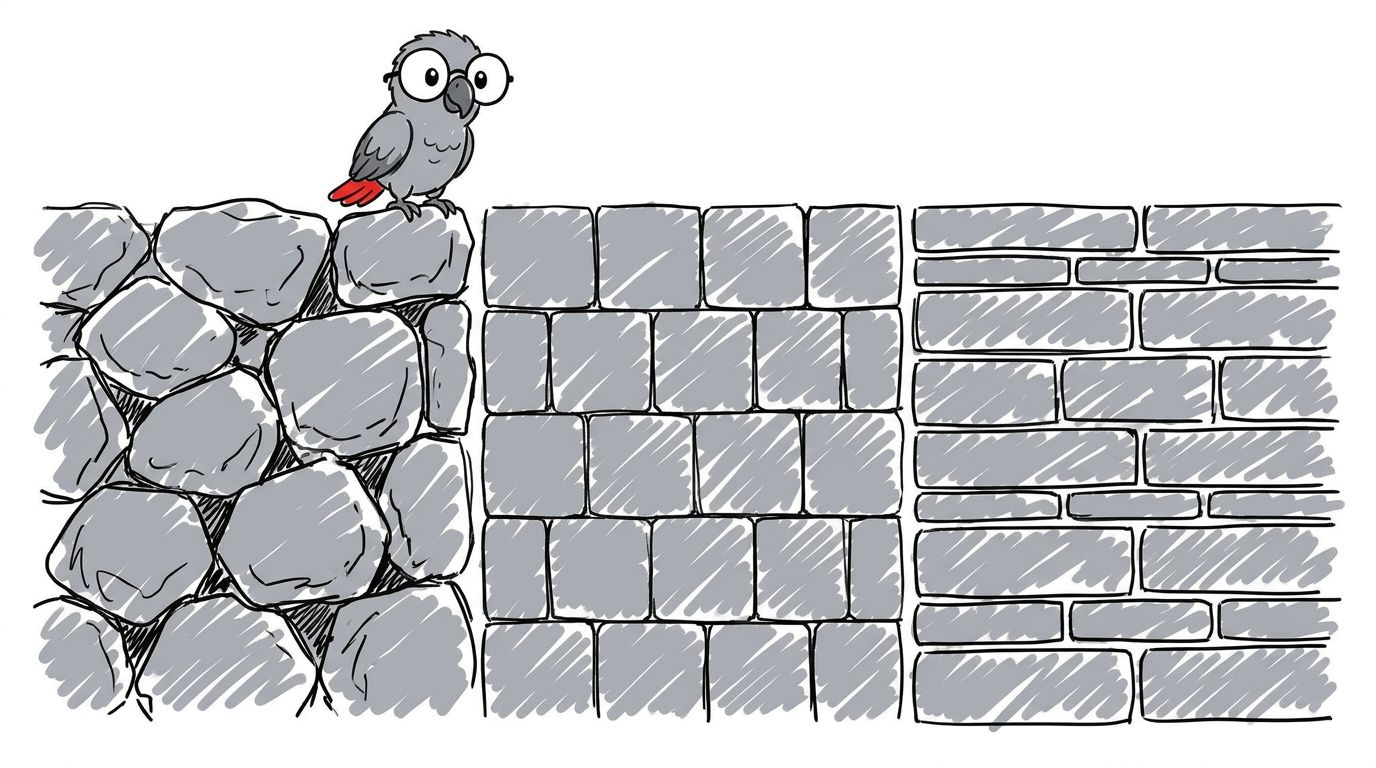
The walls themselves are a museum of stonework. In one stretch the stones are rough and irregular, fitted together by eye. In another they are cut square and set so tightly that a blade will not go between them. Elsewhere the masons arranged long flat stones in a deliberate pattern, the way lines of a poem are written across decorated paper, because the Maeda lords ruled the wealthiest domain in the country after the shogun's own lands and could afford ornament where others could only afford defence.
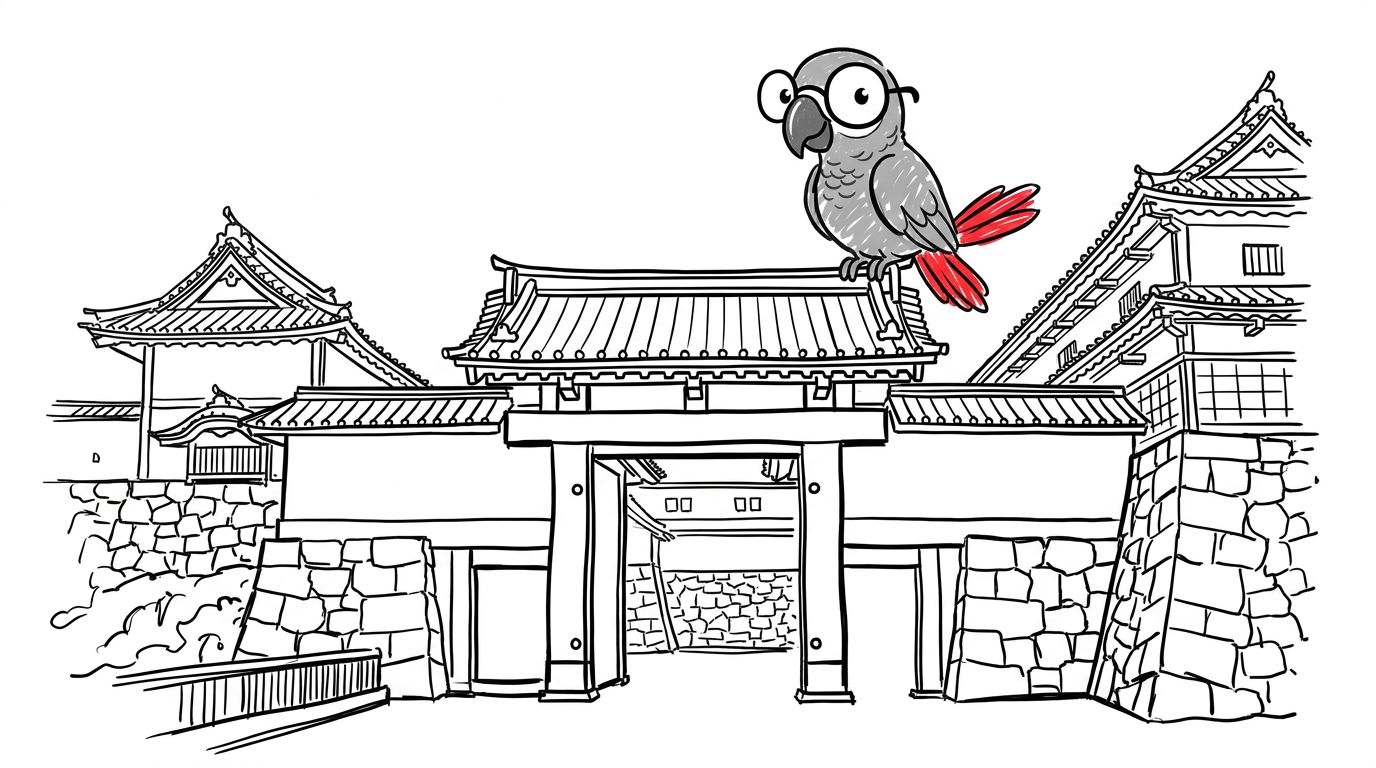
The castle burned more than once across four centuries, and most of what stands now was rebuilt from old drawings, jointed together without nails. The Ishikawa gate is the exception, rebuilt in seventeen eighty-eight and standing ever since. Polly sat on its pale roof while the grass below emptied out for the evening.
以上がストーリーです。
Pollyの声を聞きました
あなたの声はどう聞こえるか、気になりませんか?
ストーリーの一行を声に出して読んでみましょう。録音はお使いの端末に残り、アップロードされることはありません。
あなたのAIチューター
今度は声に出してみましょう。Pollyとこのストーリーについて話そう。
PollyはPollyStopの音声チューターです。こうしたストーリーについて、声に出して一緒に話します。
PollyStopを無料で始めよう。
- 毎日新しいレベル別ストーリーを、音声付きで。
- 出会った単語を保存して、あとで練習できます。
- フィードバック付きのスピーキング練習。
- 音声チューターのPollyは、より多くの学習者に広がっています。
PollyStopで学び続けよう
聞く、単語を保存、練習する