Denizin tabanında yürümek
Twice a day the North Sea pulls back for kilometres, and people walk barefoot across the bare seabed before the water races home.

Before you read
Before you read
Kuzey Denizi kıyısında Wattenmeer adı verilen tuhaf ve harika bir yer var. Deniz her gün iki kez karadan çekilerek kilometrelerce geri gider ve deniz tabanını gökyüzüne açık bırakır. Sabahleyin derin su olan yer, öğleden sonra geniş, parıldayan bir düzlüğe dönüşür. Yürüyüşçüler kenarda toplanır, ayakkabılarını çıkarır ve denizin tabanına adım atar.
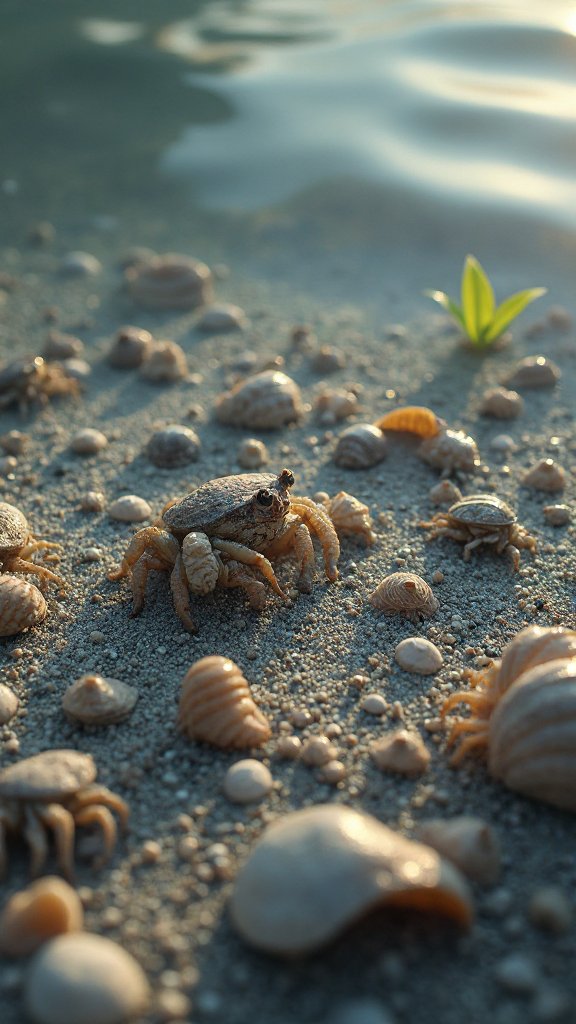
Çamur, çıplak ayakların altında yumuşak ve serindir ve parmak aralarına doğru bastırır. Bu düzlükler boş değildir. Küçük hayat doludur: küçük kabuklar, minik yengeçler ve toprağın altındaki solucanların bıraktığı kıvrık izler. Bir rehber grubu uzaktaki bir adaya doğru götürür ve zamanı dikkatle izler, çünkü açık deniz tabanı denizden sadece ödünç alınmıştır.

Sonra gelgit döner. Su, insanların beklediğinden çok daha hızlı geri gelir ve düzlüklerin üzerinde gümüş çizgiler halinde koşar. Bu yüzden burada kimse yalnız yürümez. Rehber güvenli yolları ve doğru saatleri bilir, böylece deniz kendi tabanını geri almadan grup tekrar sağlam toprağa ulaşır.
That's the story.
You just heard Polly
Want to hear what YOU sound like?
Read a line of the story out loud. Your recording stays on your device and is never uploaded.
Not bad, right? In the PollyStop app, Polly listens to exactly that and scores you right away.
Coaching, saved words, spaced repetition, and a fresh story every day.
Get PollyStop freeYour AI tutor
Now say it out loud. Talk about this story with Polly.
Polly is PollyStop's voice tutor. She talks with you about stories like this one, out loud.
Get PollyStop free.
- A new graded story every day, with audio.
- Save the words you meet and practise them later.
- Speaking practice with feedback.
- Polly, the voice tutor, is opening up to more learners.
Keep going at B1
Next stories
Read this story in another language.
Same story, different language. Compare the shape and rhythm without losing the plot.
Keep learning in PollyStop
Listen, save words, practise