The Amur

Antes de leer
Antes de leer
On the sixth morning, the train was running through the Russian Far East. The taiga had changed character again. The dominant trees now were Korean pine, Manchurian ash, and Mongolian oak. The forest felt closer, somehow, even from the train. Smaller trees, more variety, a tangle of vines on the lower trunks. This was the temperate rainforest of the Russian Far East, one of the wettest forests in the world outside the tropics.

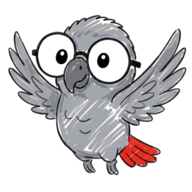
Polly was alone in the compartment. Pavel had gotten off in Ulan-Ude two nights ago. The soldier had been transferred to a different carriage. Two more passengers had cycled through and gotten off at smaller stations. The new occupant of the upper bunk was a thin woman of perhaps fifty who slept most of the day and read at night.

A single freight train passed in the opposite direction. It was nearly two kilometres long. It was carrying timber. Polly counted thirty-eight flatbeds before she stopped counting.

The train arrived at Khabarovsk in mid-morning. Khabarovsk sits on the Amur River, the eighth-longest river in the world, which forms much of the border between Russia and China. From the platform, Polly could see the river through the gap between two buildings. It was wide. It was the colour of strong tea. On the far bank, just visible through the haze, was China.

Polly hopped down to the platform. She walked the length of the train. It was good to use her legs.

A Russian Far East crane was standing at the edge of a small marsh near the station yards. It was a black-and-white bird with red around its eye, almost two metres tall, watching the train with the patience of an animal that had seen many trains. Polly tilted her red head at it. The crane tilted its head back. Polly walked closer. The crane did not move.

The Russian Far East crane is one of the rarest cranes in the world. There are perhaps three thousand of them left, breeding mostly in the Amur basin. It has a long, careful courtship dance that takes hours and looks, to humans, like an act of grave dignity. The crane in front of Polly was not dancing. It was waiting.

A conductor blew a whistle. Polly hopped back to the train. She turned at the door and looked at the crane. The crane was still looking at her. Then it lifted its long neck very slowly and walked, in deliberate steps, away from her into the marsh.

The train pulled out of Khabarovsk and turned south. The Pacific was less than seven hundred kilometres away now. The forest outside the window grew denser. A river ran beside the tracks for an hour. Then it was gone.

In the dining car at lunch, the waiter brought Polly a small plate of pelmeni with sour cream, unasked. He had figured out, over the last three days, what she liked. The pelmeni were beef. The sour cream was sharp. The window of the dining car framed a line of dark hills on the horizon. The last range before the sea.

The woman in Polly's compartment was reading the same book she had been reading every night, but now she was halfway through. The samovar was running. The train made its rhythm. Six days of it had become normal. Polly noticed that she had begun to feel, in some quiet way, that this train was where she lived.
Esa es la historia.
Acabas de escuchar a Polly
¿Quieres oír cómo suenas TÚ?
Lee en voz alta una línea de la historia. Tu grabación se queda en tu dispositivo y nunca se sube.
No está mal, ¿verdad? En la app de PollyStop, Polly escucha justo eso y te puntúa al instante.
Entrenamiento, palabras guardadas, repetición espaciada y una historia nueva cada día.
Consigue PollyStop gratisTu tutora con IA
Ahora dilo en voz alta. Habla de esta historia con Polly.
Polly es la tutora de voz de PollyStop. Habla contigo, en voz alta, sobre historias como esta.
Consigue PollyStop gratis.
- Cada día, una historia nueva y graduada, con audio.
- Guarda las palabras que encuentres y practícalas después.
- Práctica de conversación con comentarios.
- Polly, la tutora de voz, se abre a más estudiantes.
Sigue con el nivel C1
Próximas historias
Lee esta historia en otro idioma.
La misma historia, otro idioma. Compara la estructura y el ritmo sin perder el hilo.
Sigue aprendiendo en PollyStop
Escucha, guarda palabras, practica