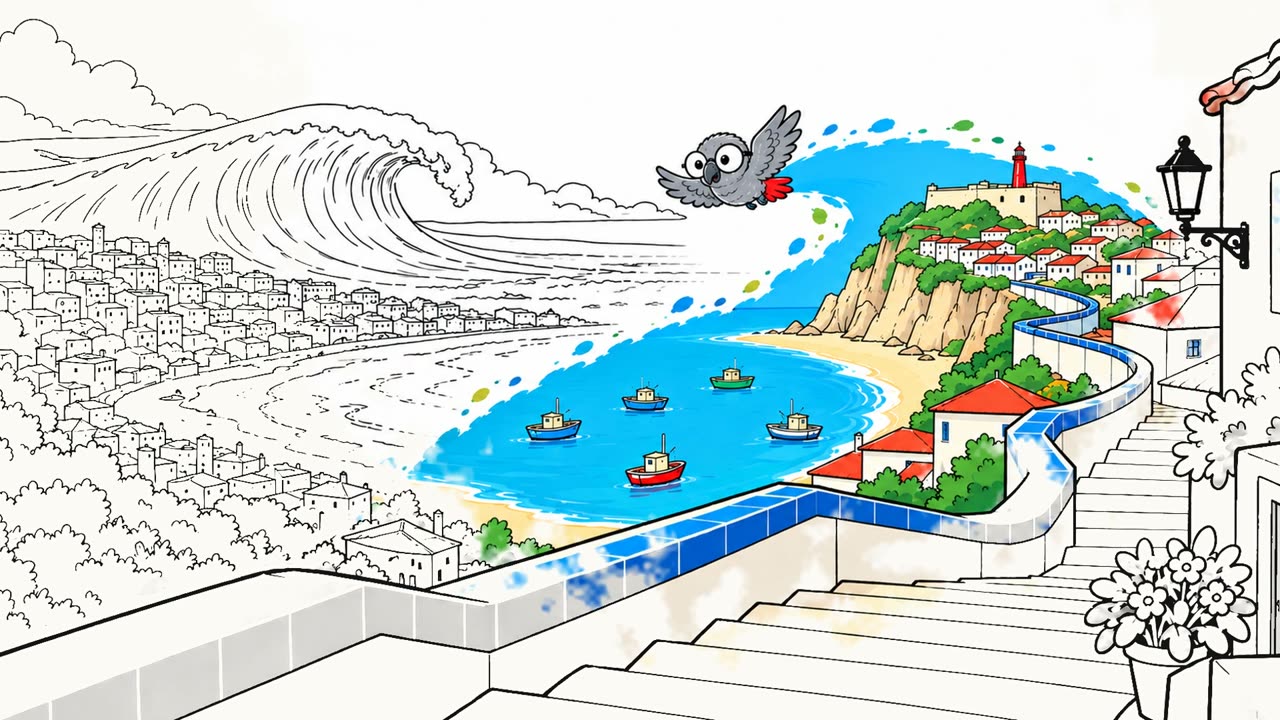
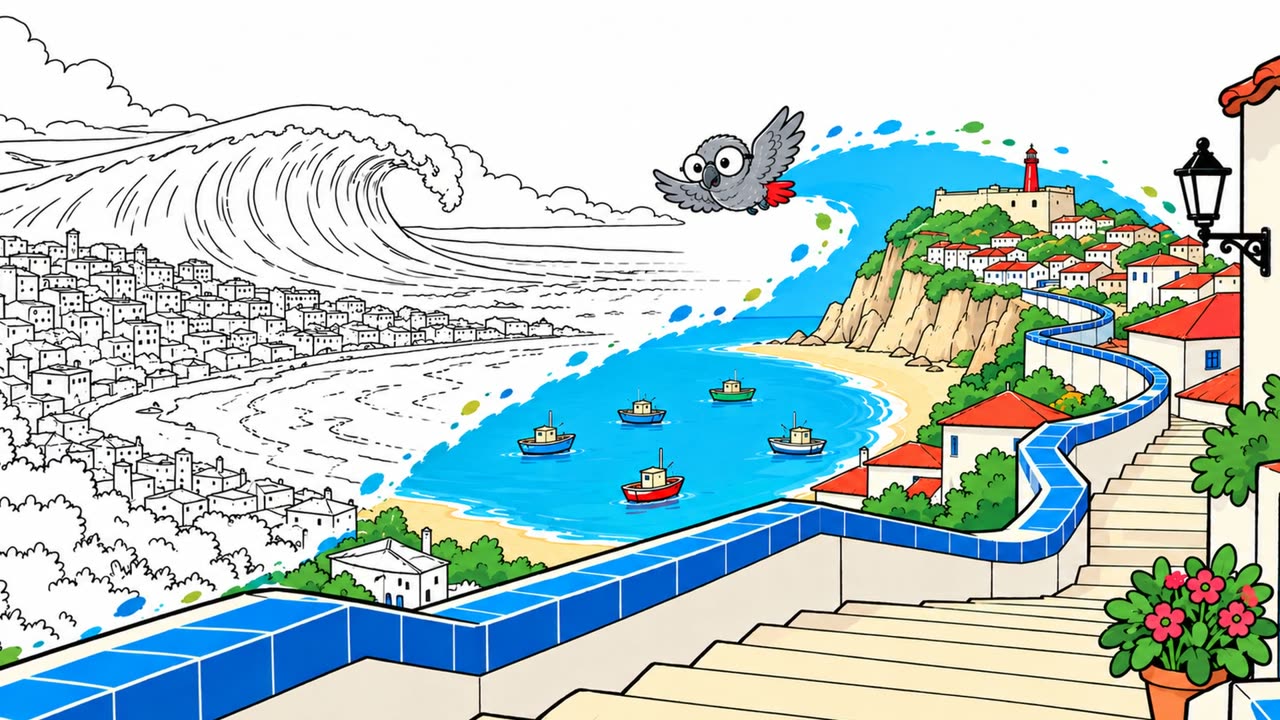
Most language games are quizzes in disguise. In PollyStop you fly over a city drawn in black and white and bring it to color by practicing German out loud. Then you land, walk into the airport and order a coffee in German from someone who answers back.
Free to start. No credit card.
Phrases come up as you fly. Say them or answer them, and the streets below fill with color. The more you practice, the more of the city comes alive.
At the café, the check-in desk and the gate you get a small job, like ordering a coffee or checking a bag, and you do it by speaking. The characters don't stop to correct you. They just answer, like people do.
The phrases that tripped you up are saved for later. Polly, your AI tutor, uses them in your next lesson, so the game and the lessons are one plan, not two apps.
Not from a game alone, and you should be wary of anyone who says otherwise. Games are good at the parts most people skip: hearing a phrase again and again without getting bored, and saying it out loud when nothing is at stake.
They're bad at explaining why a sentence works. That's why the game is only half of PollyStop. The other half is a tutor who explains, corrects and plans what you practice next.
Immersion works because you need the language to get something done: a coffee, a ticket, directions. You can't move to a new country every time you want to practice, but you can step into a place where German is the only way to get your coffee. That's what the game is for.
Adults learning German from their first words up to an intermediate level, who want to speak, not just tap answers. Ten minutes a day is enough to notice the difference.
You can start for free. Longer sessions with your tutor are part of a paid plan.
It works best if you do. When you can't talk, you can type instead.
No. It's made for adults and older teens who want to actually use German.
None. The game starts at your level and moves up as you do.
Free to start. No credit card.